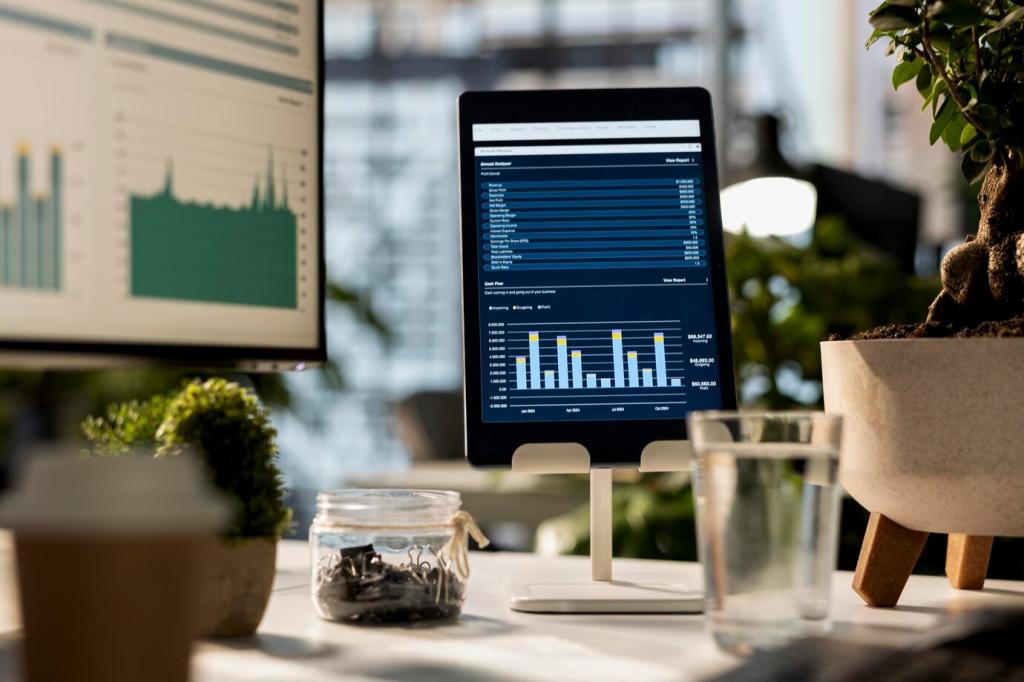

Theme: The Role of Big Data in Economic Forecasting. Dive into a friendly, practical tour of how vast, real-time datasets transform the way we read the economy, reduce blind spots, and make smarter decisions. Enjoy the stories, save the tips, and subscribe if this world of data-driven foresight excites you.

From Samples to Streams: How Big Data Changed Forecasting

During the early months of the pandemic, mobility indices and card transactions helped nowcast GDP before official releases caught up. Satellite images of parking lots hinted at factory restarts, while online prices flagged inflation pivots. If you’ve tested similar real-time indicators, tell us which ones shaped your own forecasts and why.

From Samples to Streams: How Big Data Changed Forecasting

Firm-level invoices, industry payrolls, and regional footfall data expose divergent micro-dynamics that aggregate statistics often mask. Seeing which sectors lead or lag lets forecasters map turning points sooner. Have you discovered a niche dataset that illuminated a local cycle or subtle supply chain pulse worth following?

Data Sources That Power Modern Macro Models

Web-scraped prices, mobility traces, job postings, shipment trackers, and sensor feeds expand coverage between official releases. Yet consent, terms-of-service, and regulatory compliance are non-negotiable. We favor aggregated, anonymized signals over raw personal data. What safeguards or vendor standards do you insist on before integrating new streams?

Algorithms Behind the Curtain

When predictors outnumber observations, elastic nets stabilize estimates by shrinking noise and preserving key signals. Cross-validation helps prevent optimistic backtests, while grouped penalties respect economic hierarchies. Have elastic nets rescued your inflation or employment models from overfitting? Tell us how you tuned penalties under time pressure.

Algorithms Behind the Curtain

Boosted trees capture nonlinearities and interactions common in heterogeneous economies. Tools like SHAP reveal which features drive predictions, improving trust and storytelling. Still, regime changes can break patterns overnight. We often combine trees with structural constraints—what hybrid strategies have kept your models reliable through shocks?


Quality, Bias, and Responsible Use

01

Measurement Error and Concept Drift

Sensors break, vendors re-weight, and user behavior evolves. Models decay unless monitored for drift and re-benchmarked to revised truths. Real-time vintages should be archived to evaluate genuine forecasting skill. What stability checks or dashboards have saved your team from quiet performance erosion?
02

Bias, Privacy, and Fairness

Urban smartphone data can drown out rural realities, skewing policy conclusions. Aggregation, differential privacy, and federated learning reduce risks while keeping insights useful. We document sampling frames and coverage gaps in plain language. Which privacy-preserving techniques have you successfully brought to production without crippling signal quality?
03

Reproducibility and Governance

Clear data lineage, versioned pipelines, and model cards make results auditable and explainable under scrutiny. During crises, a traceable forecast wins trust faster than a clever black box. Share your governance checklist—and subscribe for a printable template to standardize your team’s documentation.

From Model to Decision: Communicating Uncertainty

Fan charts visualize uncertainty while scenario narratives humanize paths the economy might take. Central banks routinely combine both to explain trade-offs. Which visuals help your stakeholders absorb risk quickest—probability bands, spider charts, or waterfall bridges? Comment with examples that earned executive buy-in.

From Model to Decision: Communicating Uncertainty

Turning noisy indicators into robust alerts requires calibrated thresholds and cost-sensitive metrics. We track precision, recall, and Brier scores, aligning signals to policy tolerance for false alarms. What thresholds have balanced urgency with credibility in your recession or inflation monitors?

From Model to Decision: Communicating Uncertainty

A memorable miss: our model underweighted a sudden supply shock; an economist’s qualitative read flagged shipping constraints our features overlooked. Blending expertise with data reduced error and improved trust. Tell us how you structure review rituals that keep human sense-making central.

From Model to Decision: Communicating Uncertainty

Lorem ipsum dolor sit amet, consectetur adipiscing elit. Ut elit tellus, luctus nec ullamcorper mattis, pulvinar dapibus leo.

Irellia
Privacy Overview

This website uses cookies so that we can provide you with the best user experience possible. Cookie information is stored in your browser and performs functions such as recognising you when you return to our website and helping our team to understand which sections of the website you find most interesting and useful.